
Fundraise Up has announced a major update that is coming live to a HubSpot portal near you on September 25th: recurring donations are moving from a custom object into HubSpot’s native Subscription object.
Not sure what it means? In whole, it’s a big improvement for nonprofits that use the tool. Native objects are more stable and unlock more HubSpot functionality for organizations big and small. But for those of you that have your entire data infrastructure built around the recurring donation custom object (think reporting, workflows, and donor communications), it’s a change that could cause ripple effects through your system in ways you might not expect.
For many nonprofits, recurring donations sit at the center of forecasting, stewardship, and donor reporting. When that data model changes, the impact goes far beyond where information lives. It affects how teams communicate, how revenue is projected, and how leadership evaluates performance. This update is positive, but only if your workflows are ready for it.
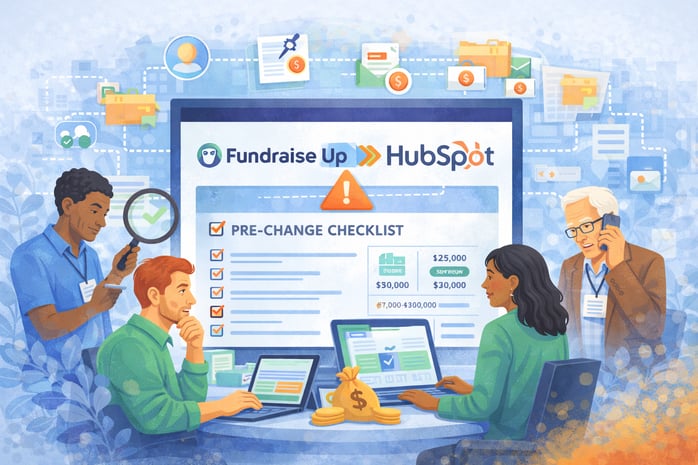
So with that in mind, here are 15 things every nonprofit should check before the September 25 deadline to make sure your fundraising engine keeps running smoothly.
1. Recurring donor workflows
Any workflow that creates tasks, sends emails, updates lifecycle stages, or flags records based on recurring donation activity needs to be reviewed. If it currently triggers off the legacy custom object, it must be rebuilt to reference the native Subscription object so automation continues to fire when a subscription is created, updated, paused, or canceled.
2. Acknowledgment emails
Recurring donors often receive immediate thank-you emails, renewal confirmations, or anniversary messages tied to their giving cadence. Confirm these emails are still triggering correctly once recurring data lives on the Subscription object, and that personalization tokens (amount, frequency, start date) still populate as expected.
3. Donor segmentation lists
Smart lists that define recurring donors (active, lapsed, upgraded, downgraded) need to be re-mapped to Subscription-based properties. Without updating these criteria, donors may fall out of key segments used for stewardship, reporting, or suppression.
4. Reporting dashboards
Recurring gift retention, growth, and revenue charts are especially vulnerable during this change. Review retention, growth, churn, and MRR reports to ensure they now pull from Subscription data rather than the retired custom object. Validate totals against known benchmarks so reporting gaps don’t go unnoticed.
5. Revenue forecasting
If recurring gifts are part of your forward-looking revenue model, confirm forecasts are recalculating correctly. Any projections tied to the old object may flatten or disappear, which can create downstream issues for finance planning and leadership reporting.
6. Upgrade tracking
The Subscription object introduces clearer metadata around upgrades and plan changes. Review how upgrade events are captured and decide how they should trigger stewardship workflows, internal alerts, or gift officer follow-up so increased commitment never goes unnoticed.
7. Churn analysis
Cancellation reasons are now available at the subscription level. This is an opportunity to intentionally define categories, segment churn by reason, and analyze trends over time. Without a plan, this data risks becoming noise instead of insight.
8. Finance integrations
If HubSpot data feeds your accounting or reconciliation workflows, confirm that recurring gift revenue still syncs accurately. Pay special attention to timing, totals, and identifiers so finance isn’t forced to reconcile mismatched numbers manually.
9. Campaign attribution
Recurring gifts associated with campaigns should be tested in the new object. Validate that attribution continues to roll up correctly so ROI, source reporting, and campaign performance metrics remain trustworthy.
10. Custom properties
Any custom fields built on the legacy object such as fund codes, appeals, source details, or restrictions need a migration plan. If they aren’t recreated or mapped to Subscription, you risk losing context that development and finance rely on.
11. Third-party connectors
Integrations built through Zapier, n8n, Tray.io, or custom middleware may still reference the old object. Audit and update these connections so data continues flowing between systems without silent failures.
12. Marketing automations
Recurring donors are often enrolled in tailored nurture streams or excluded from certain campaigns. Confirm that automations still enroll (or suppress) the right contacts once Subscription becomes the source of truth.
13. Major donor cultivation
If recurring upgrades or milestones trigger gift officer alerts or task creation, test those flows carefully. Subscription-level changes should still surface high-value moments for personal outreach.
14. Data hygiene and deduplication
Fundraise Up has noted that temporary duplicates may appear during migration. Plan time to review donor records, monitor deduplication rules, and resolve conflicts before they affect reporting or stewardship.
15. Staff training and documentation
Once the switch happens, staff need to know where recurring donor data lives and how to interpret it. Update internal documentation, training materials, and onboarding guides so teams don’t rely on outdated instructions.
Why this matters
Recurring donors are the lifeblood of sustainable fundraising. A single disruption (acknowledgments not firing, segments not updating, reports going blank) can damage donor trust and organizational insight. This change is an opportunity to strengthen your systems, but only if you take a proactive approach.
Our recommendation
If you’re using Fundraise Up + HubSpot, don’t just reconnect the integration and hope for the best. Review your workflows, automations, and reporting against this checklist to protect your infrastructure.
👉 Have questions? Let’s talk and we’ll help you evaluate the impact on your specific setup.