
Selecting a CRM is a high-stakes decision for nonprofits, especially for organizations managing complex fundraising programs, multiple teams, and long-term donor relationships. The right platform affects how data is tracked, how teams collaborate, and how effectively leadership can measure impact over time.
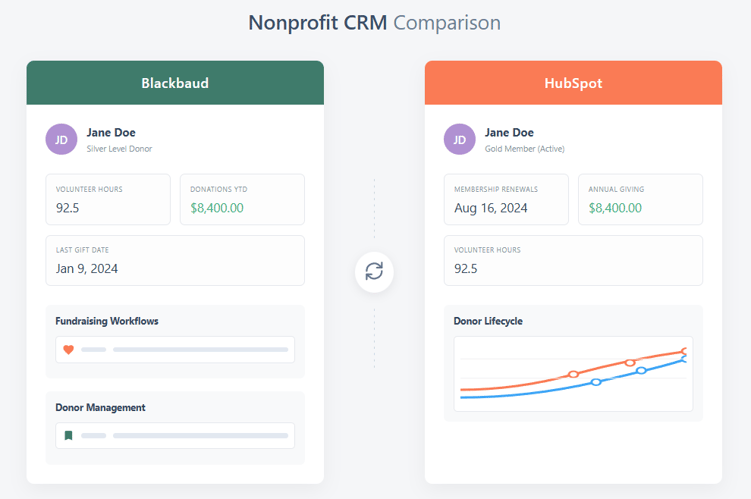
Blackbaud and HubSpot are both widely used in the nonprofit sector, but they are built with different assumptions. One is rooted in nonprofit-specific systems, while the other has evolved from a broader CRM and marketing platform. Understanding those differences is critical when evaluating how each will support donor management, fundraising workflows, and marketing automation at scale.
In this guide, we break down how Blackbaud and HubSpot compare across key areas, outline where each platform tends to work best, and help you assess which approach aligns with your organization’s structure, goals, and capacity.
Blackbaud vs HubSpot: A Comparison of Features
A meaningful comparison between Blackbaud and HubSpot looks beyond surface-level features. The key differences show up in how each platform handles donor data, fundraising workflows, and marketing automation at scale.
Below is a breakdown of how the two platforms compare across these core areas.
|
|
|
|
|
Donor Management |
Designed specifically for nonprofit donor management, with long-established tools for gift tracking, constituent records, and traditional fundraising workflows. Often well suited for organizations with established development operations and dedicated database management resources. |
Provides a flexible CRM that can support donor management when configured intentionally. Donor data, engagement history, and communication activity live in one system, which can be valuable for organizations prioritizing cross-team visibility and integrated workflows. |
|
Fundraising |
Fundraising functionality is native and deeply embedded, particularly for organizations using tools like Raiser’s Edge. Supports structured fundraising programs with strong historical reporting. |
Fundraising is typically supported through integrations with donation platforms rather than as a native function. This approach allows organizations to connect giving data directly to broader engagement and marketing activity, which can support more coordinated fundraising strategies. |
|
Marketing Automation |
Marketing tools are available but generally focus on basic email communication and campaign outreach. Advanced automation often requires additional configuration or third-party tools. |
Marketing automation is a core strength, with built-in workflows, segmentation, lifecycle tracking, and analytics. This makes it easier to coordinate fundraising, communications, and engagement efforts within a single system. |
|
Customization |
Highly capable but often rigid once implemented. Customization typically requires technical expertise and ongoing administrative support. |
Marketing automation is a core strength, with built-in workflows, segmentation, lifecycle tracking, and analytics. This makes it easier to coordinate fundraising, communications, and engagement efforts within a single system. |
|
Ease of Use |
Can be powerful for trained users but may feel complex for teams without dedicated IT or database administrators. Adoption often depends on internal technical capacity. |
Built with usability in mind, making it more accessible across departments. Training resources and intuitive interfaces support adoption by fundraising, marketing, and operations teams alike. |
|
Reporting and Cross-Team Visibility |
Reporting is strong within fundraising and donor data, but insights can become siloed when marketing and engagement tools live elsewhere. |
Reporting spans fundraising data, marketing engagement, and communication activity in one place, supporting leadership visibility and cross-team decision-making. |
|
Events and Ticketing |
Offers native event management and ticketing tools within its nonprofit ecosystem. These tools are often tightly integrated with donor records and fundraising data, which can work well for organizations running traditional events with established processes. Customization and reporting may require additional configuration or modules. |
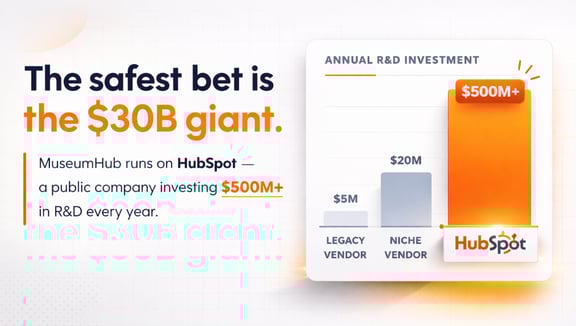
Does not include native ticketing, but supports event management through integrations with event and ticketing platforms. Event registrations, attendance, and engagement data can flow directly into the CRM, allowing organizations to connect event activity with marketing automation, donor journeys, and reporting across teams. For museums and cultural institutions, CRM-native ticketing is available through MuseumHub, which embeds ticketing directly into HubSpot. This approach allows ticketing, memberships, donations, and engagement data to live in one system, supporting cross-department reporting and coordinated visitor experiences. |
Both platforms have their strengths, but depending on your nonprofit’s size, focus, and resources, one may align better with your specific goals.
Where Blackbaud Shines (And Where It Falls Short)
Blackbaud has a long history in the nonprofit sector and remains a common choice for organizations with established development operations. Its tools are built around traditional fundraising models and structured donor management, which can work well for organizations with mature processes and dedicated administrative support.
Blackbaud can be a strong fit for nonprofits that prioritize native fundraising tools and have the resources to support a more complex system over time.
Strengths to Consider
- Purpose-built fundraising and donor management: Blackbaud offers native tools designed specifically for nonprofit fundraising, including detailed donor records, gift tracking, and campaign reporting. For organizations running complex fundraising programs, this depth can support long-term data continuity and historical reporting.
- Established nonprofit ecosystem: Many nonprofits already rely on Blackbaud products across departments, which can simplify vendor relationships and standardize processes when internal teams are trained to support the system.
Considerations at Scale
- Adoption and usability: Blackbaud’s depth often comes with a steeper learning curve. Teams without dedicated database administrators or technical support may find it harder to fully use the platform’s capabilities.
- Customization and flexibility: Adapting Blackbaud to evolving workflows often requires technical expertise or external support, which can increase long-term cost and limit agility.
💰 Cost structure
Licensing, implementation, and ongoing support costs can be significant. Organizations should assess whether the investment aligns with their operating model and internal capacity.
Why Many Nonprofits Choose HubSpot
HubSpot approaches nonprofit operations from a different starting point. Rather than focusing solely on fundraising, it provides a flexible CRM and marketing platform that can be configured to support donor engagement, communications, and reporting in one system.
HubSpot is often a strong fit for nonprofits that value cross-team visibility, integrated engagement, and the ability to adapt systems over time.
Areas Where HubSpot Stands Out
- Flexible CRM foundation : HubSpot allows organizations to shape their data model around how they work. Custom objects, properties, and integrations make it possible to support donor management without locking teams into rigid workflows.
- Marketing and engagement tools built in: Marketing automation is native to HubSpot. Organizations can coordinate email, campaigns, events, and follow-up using shared data, which supports more consistent communication across teams.
- Lower barriers to adoption: HubSpot’s interface and training resources make it accessible to staff across fundraising, marketing, and operations. Teams can adopt the platform incrementally and expand functionality as needs grow.
Which Platform is Right for Your Nonprofit?
Evaluating a CRM is only one part of a broader technology strategy. Understanding how your tools work together is just as important as choosing individual platforms.
Take our FREE Marketing Assessment to see how your nonprofit stacks up in today’s digital world, and follow it up with our Tech Assessment to ensure your tools are truly supporting your mission.


🫸🏽Need Help Navigating Your Tech Options?
Book a free consultation with Nonprofit Tech Shop to see how we can help you streamline your operations and make the most of your technology so you can focus on what matters most: making an impact.