
Grassroots campaigns have always thrived on personal connection, but the way organizers mobilize communities has evolved. While door-to-door canvassing remains a cornerstone of engagement, digital tools are now essential for expanding reach, optimizing efforts, and ensuring no opportunity is missed.
Technology is enabling campaigns to:
✅ Identify high-impact communities through real-time data analytics
✅ Automate volunteer coordination with CRM-integrated scheduling tools
✅ Track engagement seamlessly across online and offline efforts
✅ Personalize outreach using AI-driven insights on voter behavior
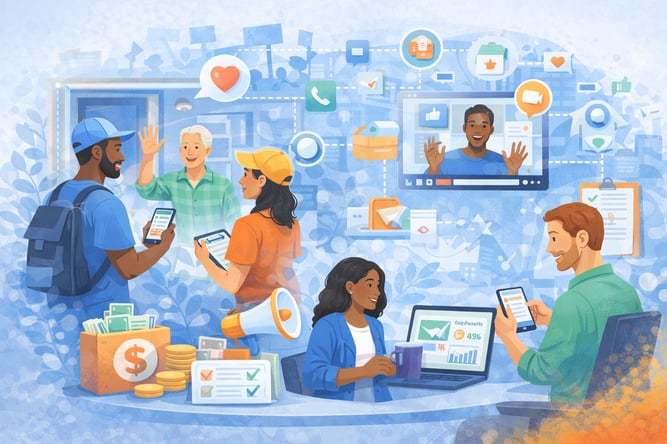
"Grassroots movements are built on connection, and technology strengthens that connection by unifying interactions across every touchpoint," says Mandy Thompson, CEO of Nonprofit Tech Shop, "With the right tools, campaigns can engage supporters in more meaningful ways and turn scattered data into a clear picture."
As grassroots efforts become more sophisticated, leveraging data-driven strategies alongside traditional organizing methods ensures that campaigns can maximize their impact while maintaining the personal touch that drives real change.
Data-Driven Canvassing: Beyond the Knock on the Door
Canvassing generates far more than a single moment of engagement. Every conversation creates information that can guide follow-up, shape outreach priorities, and strengthen long-term relationships when it is captured and used consistently.
Instead of treating door-knocking as an isolated activity, campaigns are increasingly connecting field conversations to shared data systems. This allows organizers to see engagement patterns in real time, coordinate outreach across teams, and ensure that voter interactions inform future strategy rather than disappearing into notes or spreadsheets.
Modern canvassing platforms like CanvassingHub, a canvassing app we developed here at Digital Reach and Nonprofit Tech Shop, empower organizers to:
📍 Use interactive maps to track voter engagement and outreach progress
🏠 Engage entire households, ensuring no conversation happens in isolation
📊 Capture and sync field data instantly, eliminating manual entry and follow-ups
🔗 Integrate seamlessly with CRMs like HubSpot, creating a connected outreach strategy
When field data flows into a central system, canvassing becomes part of an ongoing engagement cycle. Conversations inform follow-up, follow-up drives deeper participation, and teams gain a clearer picture of what is working across both digital and offline channels.
AI and Automation: Strengthening, Not Replacing, Human Connection
In grassroots organizing, AI and automation play a supporting role. When applied thoughtfully, they help teams manage complexity, stay responsive, and focus their time where it has the greatest impact.
Technology becomes useful when it reduces manual work and surfaces insight, allowing organizers to concentrate on conversations that build trust and motivate action. Automation handles the background tasks that are easy to miss at scale, while teams stay focused on direct engagement.
AI-supported tools help campaigns:
- Identify engagement patterns that indicate where outreach is most likely to matter
- Trigger timely follow-up based on supporter activity and field interactions
- Adapt messaging to reflect how different audiences engage across channels
Used strategically, automation supports consistency without flattening relationships. It helps campaigns maintain momentum across long timelines, multiple teams, and distributed programs, while keeping outreach aligned and intentional. When systems are designed to support organizers rather than replace them, technology strengthens coordination and follow-through. The result is outreach that stays personal, timely, and responsive, even as campaigns grow in size and complexity.
Challenges in Adopting Tech-Driven Strategies
While technology has transformed grassroots organizing, adopting new digital tools isn’t always straightforward. Many organizations face structural, logistical, and financial hurdles when integrating tech into their workflows.
Here are some of the most common roadblocks, along with ways to overcome them:
❌ Data Silos
Many grassroots organizations rely on multiple, disconnected systems (spreadsheets, outdated databases, and fragmented CRMs), making it difficult to get a clear, unified picture of engagement. Without seamless data flow, opportunities for strategic outreach can be missed.
Solution: Choose platforms that integrate easily with your existing tools, ensuring that volunteer engagement, donor data, and campaign outreach live in one connected system. If a full CRM overhaul isn’t an option, automation tools like Zapier can help bridge the gaps between disconnected systems.
❌ Volunteer Adoption
Even the most advanced tools are only effective if people know how to use them. Many canvassers and field organizers are volunteers with limited time for training, and overly complex systems can slow down operations instead of enhancing them.
Solution: Prioritize user-friendly platforms with intuitive interfaces and mobile-friendly options. Short, task-specific training videos or live onboarding sessions can also make adoption smoother without overwhelming volunteers.
❌ Cost Barriers
Budget constraints often prevent grassroots campaigns from investing in the tools they need. Many movements operate with limited funding, making it essential to choose cost-effective solutions that maximize impact without adding financial strain.
Solution: Take advantage of nonprofit discounts and free tiers offered by many tech providers. Platforms like HubSpot, Google for Nonprofits, and certain CRM systems offer nonprofit-specific pricing and grants to help reduce costs.
The key to successfully adopting new technology is to start small, integrate strategically, and ensure that tools serve your mission, not add complexity. By focusing on integration, accessibility, and cost-efficiency, campaigns can leverage technology to mobilize more effectively and make data-driven decisions that drive meaningful change.
What’s Next for Grassroots Campaigns?
Grassroots organizing is becoming more connected, coordinated, and data-aware. As campaigns operate across more channels and teams, technology increasingly supports how information flows between field work, digital outreach, and strategy.
Campaigns are already seeing shifts toward:
- More informed outreach driven by engagement patterns and supporter behavior
- Tighter coordination between field efforts and digital communication
- Mobile canvassing tools that capture data in real time and reduce manual work
When systems are designed to support organizers, technology improves consistency and follow-through across long timelines and large programs. It helps teams stay aligned, respond faster, and build momentum without losing sight of the relationships at the core of organizing work.
Grassroots efforts succeed when people and systems work together. CanvassingHub is built specifically for advocacy and political organizing, connecting field operations, real-time data, and supporter insight in one place. This allows campaigns to scale outreach while preserving the personal interactions that drive participation and trust.
Curious how that looks in practice? Schedule a free demo to explore how CanvassingHub can support your campaign’s next phase of growth.
👉🏽Getting Started FAQ: HubSpot + CanvassingHub
Q: Do we need to be “advanced” HubSpot users to start?
A: No. You can begin with a clean contact list, a few custom fields (Support Level, Canvass Result, Ward/Precinct), and two workflows for follow-up. The rest can layer in over time.
Q: Can we keep some tools we already use?
A: Yes. The goal is to centralize data and actions in HubSpot. If a tool adds value, keep it. Just make sure the outcomes (results, tags, shifts) write back to the CRM so follow-up and reporting work.
Q: How does household targeting actually work?
A: Contacts share a Household ID and address. CanvassingHub lets field teams view and prioritize at the household level, avoid repeat knocks, and personalize follow-up for everyone at that address.
Q: What if our data is a mess?
A: Start with a single import, deduplicate, and standardize a small set of fields. You can improve quality in sprints (e.g., fix emails this week, addresses next week) while the program runs.
Q: How fast should follow-up happen after a door conversation?
A: Aim for 24 - 48 hours. A simple workflow can send a thank-you, create a staff task, and add the contact to the right invite or nurture without manual chasing.
Q: Can volunteers log results from their phones?
A: Yes. CanvassingHub is built for mobile capture. Results push to the contact record in real time so lists, workflows, and dashboards update the same day.
Q: What should we measure weekly (without drowning in reports)?
A: Reach rate by turf, support mix (strong/lean/undecided), follow-up time for “Interested,” volunteer pipeline (sign-ups → completed), post-canvass actions within 14 days, and basic data quality.
Q: How do we connect field work to fundraising?
A: Mark supportive conversations and track gifts within 30 days. That view shows field-influenced revenue and tells you where to repeat the approach.
Q: We run persuasion and fundraising. How do we avoid mixed messages?
A: Use separate, dynamic segments and clear suppression rules. Don’t fundraise to recent “not interested” or undecided records; give them a short info series first.